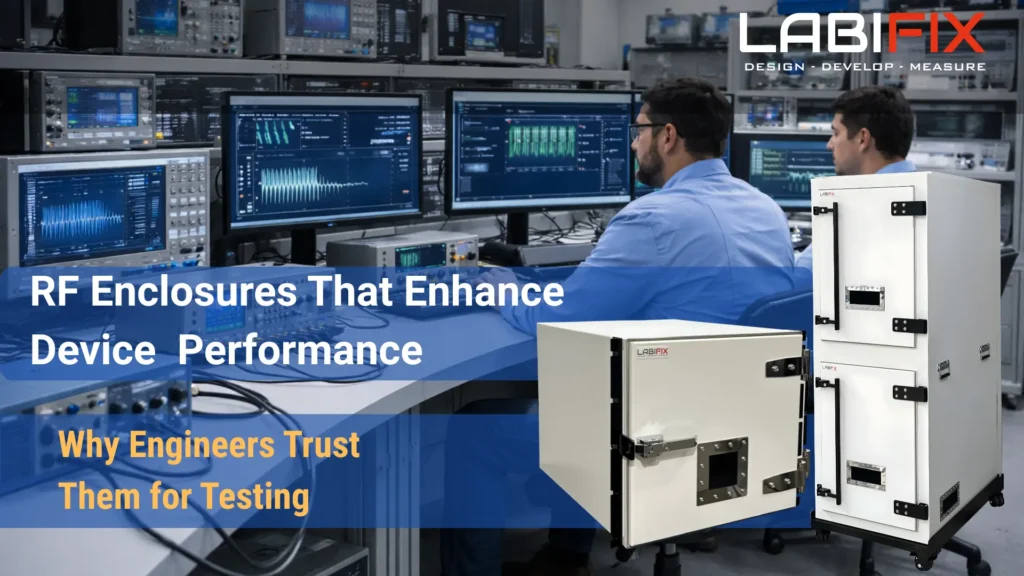
Advanced RF shield boxes and test enclosures built for reliable wireless testing.
An RF shielded enclosure blocks electromagnetic interference by creating a sealed, conductive barrier around the device under test — and despite the different names on spec sheets, an RF isolation box, RF isolation chamber, and Faraday box almost always describe the same category of product. An RF shielded cabinet is the one real exception: it's a rack-integrated form factor built around a 19" equipment rack rather than a general-purpose test space. The terms overlap because the underlying physics — Faraday cage shielding — is identical. What changes is the form factor, the shielding effectiveness in dB, the frequency range it's rated for, and how it's meant to sit on a bench, in a rack, or as a standalone chamber. This guide breaks down what each term actually means, so RF/EMC test engineers, R&D teams, and wireless device manufacturers can buy the right RF shielded enclosure for their test environment — not just the one with the catchiest name.
An RF shielded enclosure is a metal-lined chamber engineered to attenuate radio frequency signals in both directions — external interference doesn't get in, and the signal from the device under test doesn't leak out. LabiFix builds these to deliver up to 100dB of isolation from 400MHz to 12GHz, which covers Wi-Fi, Bluetooth, GPS, LTE, and most sub-6GHz 5G bands used in wireless device testing. Every RF shielded enclosure relies on the same core elements: continuous conductive shielding, RF gaskets at every seam and door, filtered power feedthroughs, and ventilation that doesn't compromise the shield. Get any one of those wrong and the enclosure's real-world shielding effectiveness falls well short of its spec sheet number — regardless of what the box is called.
In practice, yes. RF isolation box, RF isolation chamber, and Faraday box are used almost interchangeably with RF shielded enclosure across the EMC and wireless testing industry — you'll see all four terms on datasheets describing structurally similar products. "RF isolation chamber" tends to show up for larger units built for detailed, high-accuracy testing, while "Faraday box" is the more general, physics-first name (after Michael Faraday's cage principle) that shows up more in engineering conversation than on spec sheets. If a vendor calls their product an RF isolation box or an RF shielded enclosure, ask about the same three numbers regardless of the label: shielding effectiveness in dB, tested frequency range, and internal dimensions. The name on the box tells you less than the datasheet does.
An RF shielded cabinet is where the naming actually points to a real structural difference. Instead of a general-purpose test box, it's built around a 19" equipment rack, so it houses rack-mounted instruments — spectrum analyzers, signal generators, network testers — inside a shielded enclosure rather than shielding the device under test on an open bench. A rack mount shield box gives you the same isolation performance as a benchtop unit, but organizes your test equipment the way a lab already works: racked, cabled, and ready to move to a different bench. If your test setup already lives in a rack, an RF shielded cabinet saves you from re-architecting your bench around a shielded box shape that wasn't designed for rack gear.
The right choice comes down to how and where you're testing, not which name sounds most technical.
Whatever the form factor, verify shielding effectiveness in dB across your actual test frequencies, not just a headline number at one frequency. A shield rated at 100dB at 1GHz can perform very differently at 6GHz — ask for the full frequency plot, not a single spec. Reference sources such as independent RF shielded test enclosure listings are a useful way to sanity-check a vendor's claims.
Functionally, yes — an RF shielded enclosure applies Faraday cage principles inside a purpose-built test enclosure with gaskets, filtered feedthroughs, and controlled ventilation that a basic Faraday cage doesn't need.
Most Wi-Fi, Bluetooth, and cellular pre-compliance testing needs at least 80–100dB of isolation across your test frequency range to get repeatable, interference-free results.
Only if your equipment is rack-mounted. An RF shielded cabinet is built around a 19" rack, not a benchtop footprint, so it solves a different physical problem even though the shielding principle is identical.
RF Shielded Enclosure vs RF Isolation Box vs RF Shielded Cabinet: Quick Comparison
| Term | Form Factor | Primary Focus |
|---|---|---|
| RF Shielded Enclosure | General-purpose test enclosure | General-purpose benchtop or standalone RF testing |
| RF Isolation Box / Faraday Box | Compact benchtop or portable test box | Portable / benchtop DUT wireless device testing |
| RF Shielded Cabinet | Rack-integrated 19-inch equipment cabinet | Rack-mounted test instruments & equipment gear |
Frequently Asked Questions
Newsletter
Subscribe to our newsletter for technical insights and product updates.
Latest Posts
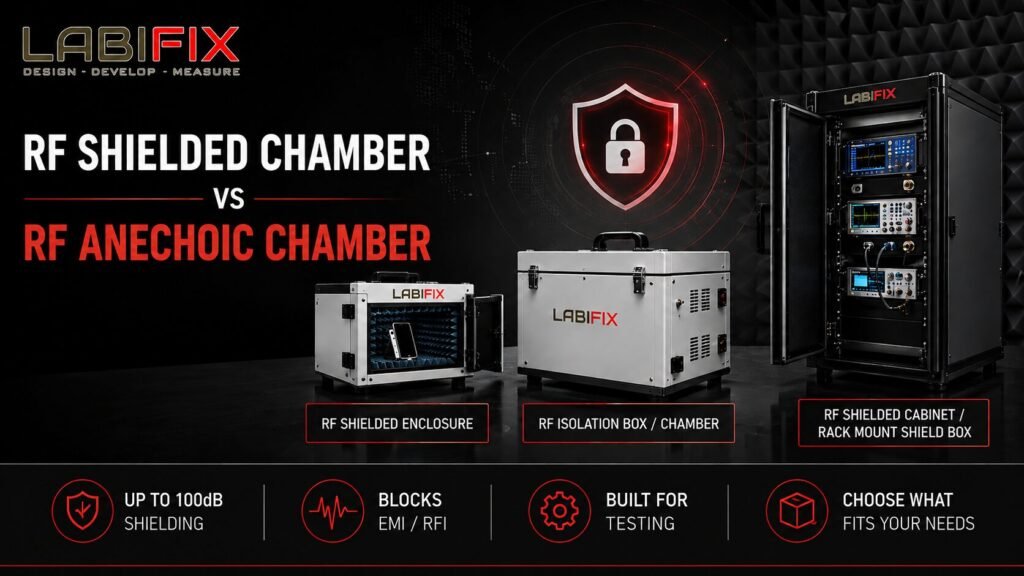
RF Shielded Chamber vs RF Anechoic Chamber Guide
August 6, 2026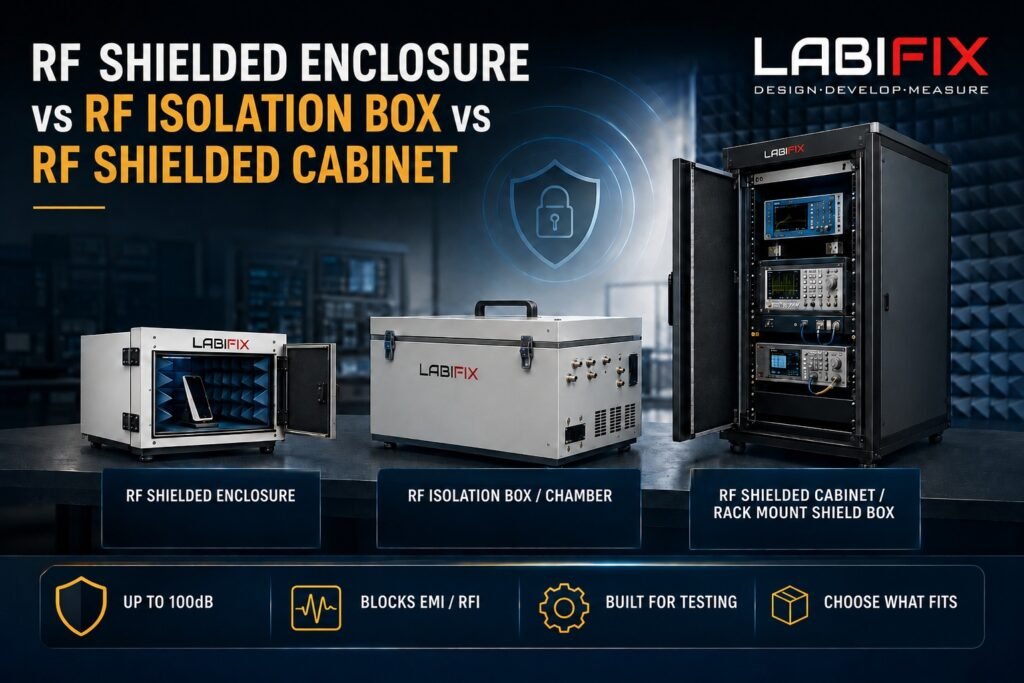
RF Shielded Enclosure vs RF Isolation Box vs Cabinet
August 6, 2026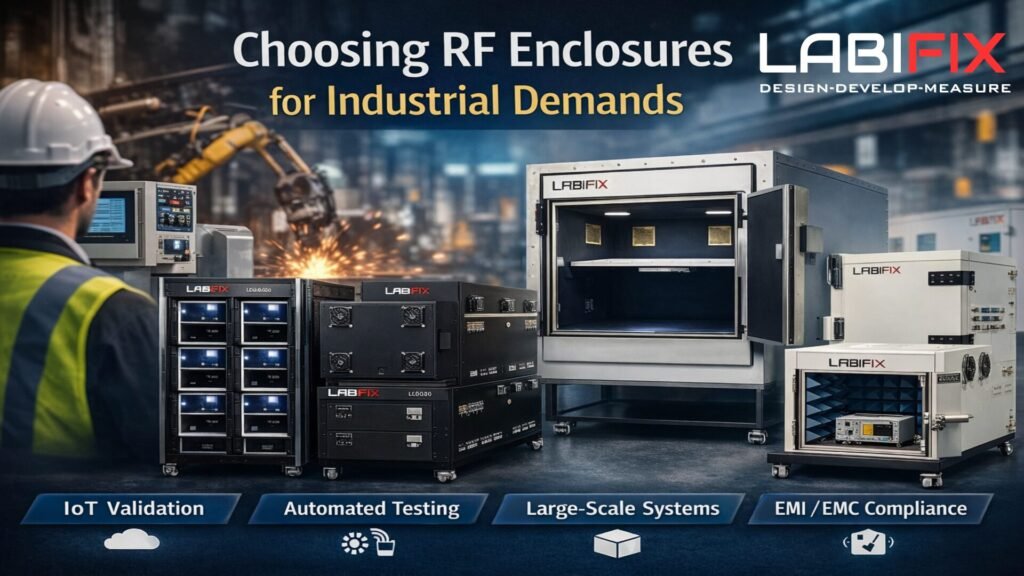
Choosing RF Enclosures for Industrial Demands
January 28, 2026
RF Enclosures Designed for Medical Innovation
January 23, 2026
Future Trends Driving Smarter RF Enclosures
January 18, 2026